How Online Slots Actually Work: RNG, RTP, Volatility and Paylines
Online slots look simple: press spin and hope for the best. Under the hood, every result comes from a random number generator, and two numbers - RTP and volatility - decide how the game behaves over time. This guide explains what actually happens when you spin, in plain language, so you can pick games that fit your budget instead of guessing.

Official game art: Pragmatic Play.
RNG: every spin stands alone
Inside every online slot sits a random number generator, or RNG. It is software that keeps producing unpredictable values even when nobody is playing. The moment you press spin, the game takes the current value and turns it into the symbols you see on the reels.
The key fact: the RNG has no memory. What happened on the previous spin - your spin or anyone else's - changes nothing about the next one. Winning streaks and losing streaks are just what randomness looks like over short samples. "Hot" and "cold" machines are a myth, not a pattern you can trade on.
At licensed casinos, the RNG is not a black box you have to trust blindly. Independent testing labs such as eCOGRA, iTech Labs and GLI (Gaming Laboratories International) audit the game's code and run its output through statistical tests for randomness, and they verify that the game's actual results match the published RTP over millions of rounds. Casinos and providers submit to this testing because regulators require it. If a site carries no license and shows no certification badges, none of this oversight exists there.
RTP: the long-term math, not a session promise
RTP stands for Return to Player. It is the theoretical percentage of all wagered money that a slot pays back, calculated over millions of spins. A 96% RTP does not mean you get 96 back from every 100 you bet today. It means the game is designed to return about 96 per 100 wagered over its entire lifetime. In a single session, anything can happen - you can double your money or lose it all.
One detail many players miss: many providers release the same slot with several RTP settings, and each casino picks one of them. Take Gates of Olympus from Pragmatic Play: the game ships with multiple RTP configurations, so the exact figure can differ between casinos. To know the real number at your casino, open the game info or paytable inside the game itself, where you play.
That makes the paytable the most useful screen in the game. Look for the info or help button - usually an "i" icon - and read it before your first real bet. It tells you the RTP setting, the value of each symbol and how the features trigger. If you want to compare RTP figures across games, our slot RTP database is built for exactly that.
Volatility: the rhythm of the game
Volatility (sometimes called variance) describes how a slot delivers its wins. Two slots can share the same RTP and still feel like different games:
- Low volatility: wins land often but are usually small. Your balance lasts longer and the session feels steady.
- High volatility: wins land rarely, but they can be much bigger. Long dry spells are normal, and you need a bigger bankroll to ride them out.
- Medium volatility: a middle ground between the two.
Providers label their games with these ratings, and the rating shapes the bankroll you need. A high-volatility game played on a small deposit is usually a short session: the game is not broken, your budget just does not match its rhythm. Match the volatility to your bankroll and your patience, not to how the game looks.
Paylines and ways to win
Classic slots paid on a single horizontal line. Modern video slots work differently:
- Fixed paylines: the game pays when matching symbols land on specific line patterns. Your bet covers all lines at once.
- Ways to win: matching symbols on consecutive reels win no matter where they sit on each reel. A common format is 243 ways.
- Cluster pays: groups of matching symbols touching each other pay out, with no lines or reels involved at all.

Official game art: Pragmatic Play.
One rule applies to all formats: more paylines or more ways does not mean a higher RTP. The math behind the game stays the same - the number of ways only changes how wins are distributed, not how much the game returns overall. Check the paytable to see which format your game uses.
Bonus features: where the big wins actually come from
In most modern slots, the base game keeps you playing and the bonus features pay. The usual suspects:
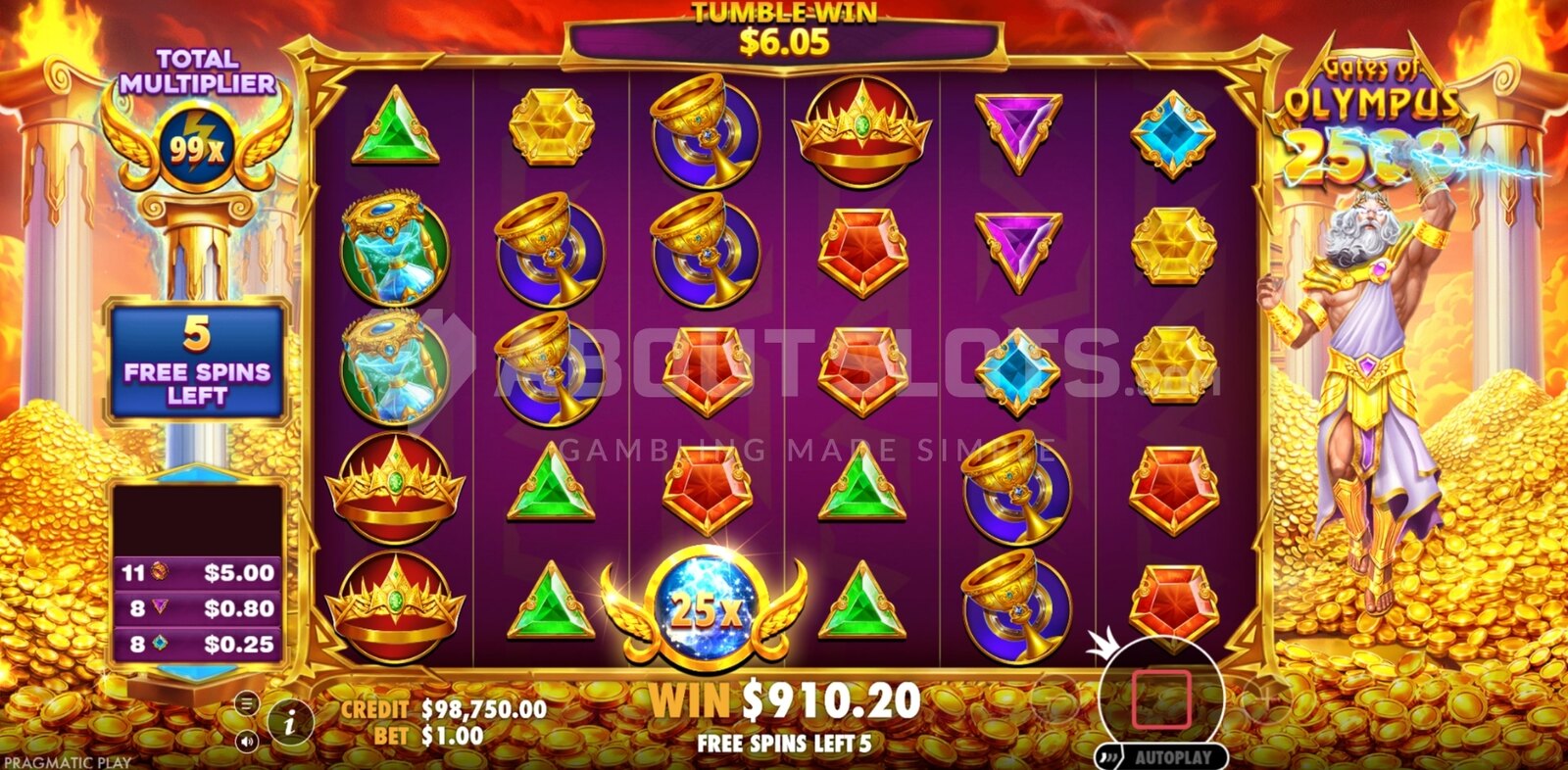
- Free spins: a set of rounds you play without betting, often with extra multipliers or symbols added.
- Wilds: symbols that stand in for other symbols to complete wins.
- Multipliers: they multiply your win, sometimes stacking through a whole bonus round.
Official game art: Pragmatic Play.
Many games also offer a bonus buy: you pay a set price to jump straight into the feature instead of waiting for it to trigger. Bonus buys change the cost of your session and can change the game's RTP, so read the game info before using one. Availability depends on jurisdiction - it is not offered everywhere. And if a casino bonus comes with free spins, check the wagering rules before you play: our wagering requirement calculator shows what a bonus actually costs to clear.
Myths that cost money
- "The machine is due to pay." No. The RNG has no memory of previous spins, so there is no balance to even out. A slot that just paid a big win is exactly as likely to pay again as one that has paid nothing all day.
- "Time of day matters." The RNG does not know what time it is. Night spins are not looser than morning spins; busier servers change nothing about the math.
- "Bet size changes the RNG." Bet size changes how much you win or lose, never the randomness itself. A bigger bet buys bigger potential wins, not better odds.
- "The demo is rigged to hook me." Certified providers use the same math in demo and real-money mode - the demo is the game's honest face, which is exactly why trying it first is useful. If a demo feels different from real play at the same casino, that is variance, not a switch being flipped.
How to use all of this in practice
- Try the demo first. Play a new game for free before spending anything. You will learn its volatility and features without paying tuition.
- Read the paytable before betting. Check the RTP setting, symbol values and bonus rules in the game's info screen. Two minutes of reading beats two hours of guessing.
- Match volatility to your bankroll. Small deposit plus high volatility usually means a short session. Either lower the stakes or pick a steadier game.
- Set a session limit and a stop-loss. Decide in advance how much you are willing to spend and when you walk away, win or lose. If gambling stops being fun, our responsible gambling page lists the warning signs and where to get help.
FAQ
What is RTP and where do I find it?
RTP is the theoretical percentage of all wagered money a slot pays back over millions of spins. You can usually find it in the paytable or game info screen inside the game. Many providers ship the same slot with several RTP settings, so the exact figure depends on the casino - always check the in-game info where you play.
Can a casino rig an online slot?
Not at licensed casinos. The game's math and RNG are certified by independent labs like eCOGRA, iTech Labs or GLI, and the operator cannot change the outcome of individual spins. Unlicensed sites have no such oversight, which is why playing at regulated casinos matters.
High or low volatility - which is better?
Neither is better in general. Low volatility slots pay small wins more often, which suits small budgets and longer sessions. High volatility slots pay less often but can pay bigger amounts, which needs a larger bankroll to survive the dry spells. Pick the one that matches your budget and patience.
Is it true that a new slot pays more at first?
No. Every spin is decided by the random number generator, which has no memory of previous spins or of when the game was released. A new slot behaves exactly like an old one with the same math.